Tool Details
| Category | AI / Research & Knowledge |
| Website | connectedpapers.com |
| Tags | research, Connected Papers |
What is Connected Papers?
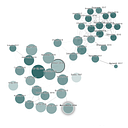
Connected Papers is a research tool that takes one academic paper and shows related work as a visual network graph. Instead of chasing reference lists one at a time during a literature review, you get a map of the field in a few seconds.
You start by entering a paper's title, DOI or link. The tool draws on the Semantic Scholar paper corpus, picks the few dozen papers most similar to your starting point and lays them out on a graph. Similarity isn't based on direct citation chains but on co-citation and bibliographic coupling, so papers that never cite each other but cover the same ground can still appear side by side.
Similar papers cluster together, node size reflects citation count and color shade reflects publication year, which makes it easy to tell foundational work from recent work.
Key Features
- Builds a visual similarity graph of related research from a single origin paper.
- Prior Works lists the older papers that the graph's papers commonly build on, which often include the field's seminal work.
- Derivative Works lists newer papers that commonly cite the graph's papers, such as reviews and recent state-of-the-art studies.
- Multi-origin graphs let you add a second origin paper to narrow and refine the results.
- Data comes from the Semantic Scholar paper corpus and spans many disciplines.
Connected Papers is listed among the digital tools in the AI category.
Who Is It For?
Connected Papers is useful for graduate students writing a thesis, researchers moving into a new field and anyone doing a literature review. A student starting a thesis can map an area from one key paper, a peer reviewer can check whether a manuscript's references miss important work, and a researcher can use Derivative Works to catch up on the latest studies in their topic.
Pricing
The Free plan includes all core features but is limited to 5 graphs per month. For unlimited graphs there are two paid options: Academic, for researchers at academic institutions, non-profits and personal use, and Business, for commercial use. Third-party sites quote conflicting prices, so check connectedpapers.com/pricing for current rates.
Pros
- Gives a quick visual sense of how a research area is structured.
- Surfaces related papers that aren't linked by direct citations.
- The free plan is enough to try all the core features.
Cons
- The free plan caps you at 5 graphs per month.
- Very recent or rarely cited papers can produce thin graphs, and the method tends to favor highly cited work.
- Coverage is limited to what's in Semantic Scholar.
Frequently Asked Questions
Is Connected Papers free?
Yes, the free plan includes all core features but is limited to 5 graphs per month. For more you need the Academic or Business plan.
How do I use Connected Papers?
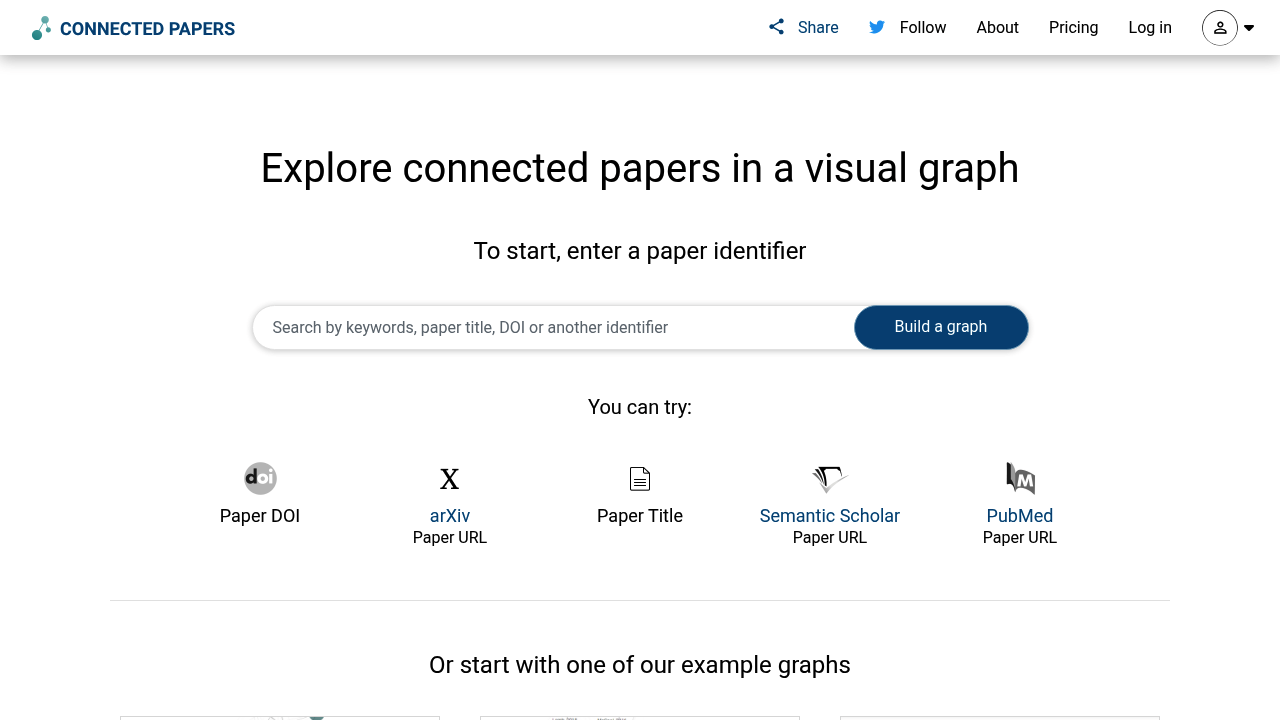
Type a paper's title, DOI or link into the search box on the home page and build the graph. Then click nodes to read abstracts and check the Prior Works and Derivative Works lists.
How is Connected Papers different from a citation tree?
A citation tree only follows a paper's references and the papers that cite it. Connected Papers measures similarity through co-citation and bibliographic coupling, so it can surface related papers with no direct citation link.
Details checked against the official website as of November 2026. Pricing may change.
Alternatives in AI
Similar tools you can try besides Connected Papers